
Boris Cherny's AI Maturity Model Is Smart. It's Also Incomplete.

Over the weekend, Boris Cherny - the head of Claude Code at Anthropic - released a maturity model for AI adoption. He’s a smart guy, and it’s hugely valuable. There’s 5 steps:
Step 0: Gated, just dipping your toes in
Step 1: Assisted, augmenting the work you’re doing without significantly adapting your processes or delegating any work to agents
Step 2: Parallel, delegating a huge amount of trust to a limited number of agents, but checking everything diligently.
Step 3: Supervised Autonomy, delegating nearly everything once the decision is made about what to pursue. Managing outcomes instead of output.
Step 4: AI Native, treating your agents as you would a large team - setting goals and targets, and adjusting guardrails for work at a scale level. Allowing the system to build, deploy, and schedule (hire, manage, and fire!) agents autonomously.
It’s also a bit myopic.
As usual, there’s an XKCD comic that’s applicable:
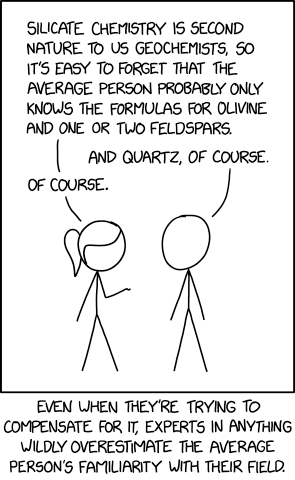
He’s falling into the expert trap: Not everyone works the way that Boris does - his model is rooted in the perspective of a developer working specifically with Agents. And while it’s very useful, I’m not a dev; I don’t have unlimited tokens available to me; and my needs don’t run into hundreds or thousands of agents working on my behalf.
If you’re following me, you’re more likely focused on broader executive or product leadership. In that case, Boris’ model will be useful to you as well, but even more so if you adapt it by asking some of the same questions I did.
Where are you now on the model?
What problems would moving further up the model solve? What problems might it create?
How do we want to work?
As per the Makers Manifesto: You can delegate decisions; you cannot delegate accountability. Where do humans belong in the loop?
AI is not just agents - there’s plenty of related technologies (RA, ML, NLP, etc), and plenty of other ways of achieving efficiency and scale (RPA, traditional automation approaches). AI is a tool; it is an answer to some problems; it is not the answer to all problems. What are you trying to solve? And what’s the best approach to solving it?
As we don’t have an unlimited number of tokens, which opportunities are worth pursuing, and how do we organise people to collaborate on this efficiently? (It turns out that prioritisation is still a critical skill!) And how do we match our roadmap to what our customers are ready for?
And who should be working on a given opportunity?
Run through these first. If the answers point to deeper org-level work, you’re on the right track: that's where change actually sticks. Getting your company ready to work effectively with the tools and available technologies is critical - but harnessing agents is not the only thing that your organisation needs to do it well.
Over the last 20(!) years, I’ve seen countless company transformations: Digital, Agile, and Product, and so many more. Few of them stuck and worked. AI transformations are just as doomed to fail if we don’t also focus on things like how we:
Work together and enable our people;
Determine and manage our strategy;
Communicate, collaborate, and prioritise at scale.
I recently completed a Diploma in Team/Organisation Coaching because I wanted to figure out how to help people deal with this kind of uncertainty - and have now teamed up with my partner on the course, Executive Coach and Organisational Design consultant Faye Towers, specifically to help organisations deal with these kinds of problems. Interested in learning more? Get in touch - I’d love to talk.
Image by Jonas Begtsson, from Flickr.